
Case Study: Capital Metro User Research
Capital Metro partnered with Progress to better understand how riders and non-riders navigate public transit online—and to identify opportunities for creating a more intuitive, accessible digital experience.
Improving a transit website requires understanding far more than website usability. It requires understanding the context in which people plan trips, purchase fares, seek information, and make transportation decisions. Progress designed a comprehensive research program that combined field observation, expert evaluation, and usability testing to build a complete picture of the customer experience.
Our Approach
Our research unfolded in three phases, with each informing the next.
Field Research Across Austin
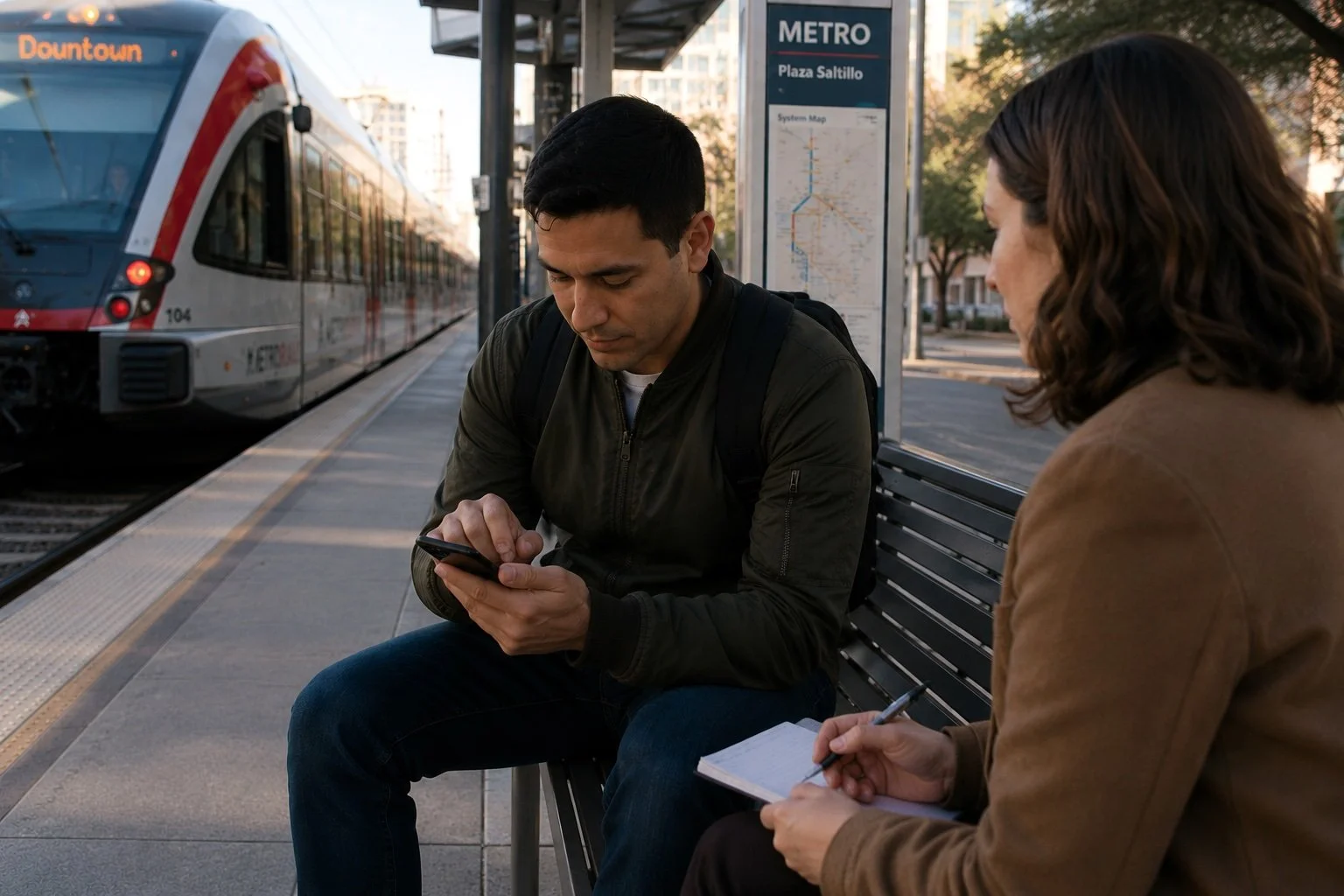
We observed riders using buses, trains, and transit stations throughout Austin to understand how people planned trips, accessed information, and interacted with Capital Metro’s services in real-world settings.
Expert UX Evaluation
Our team conducted a comprehensive heuristic review of the existing website, identifying usability, accessibility, navigation, and content issues before testing with customers.
Usability Testing
We recruited and tested 50 participants—including 25 regular riders and 25 non-riders—in our usability laboratory. Participants completed realistic tasks while we observed how they searched for routes, understood fares, explored services, and planned trips.
Impact
By combining field research, expert analysis, and usability testing, Progress helped Capital Metro understand both the strengths and shortcomings of its digital experience from multiple perspectives.
The research culminated in a comprehensive set of prioritized findings and recommendations that informed the roadmap for the redesign of Capital Metro’s website, helping the organization make strategic improvements based on the needs and behaviors of both current and prospective riders.
“Progress clearly explained the usability concerns. It was obvious they did their research and got to know the product prior to testing. They were kind and gentle with participants as well as breaking the news to the development team. The presentation deck was put together very well - they offered great examples for how things could be improved.”
How User Research Can Work For You
Whether you’re launching a new website or improving an existing one, the best decisions come from understanding how real people find information, complete tasks, and navigate your digital experience. By combining expert evaluation with usability testing and contextual field research, we uncover opportunities to improve navigation, clarify content, and create digital experiences that better serve both new and existing customers.